Cutting-Edge Machine Tools Innovation Seminar
The manufacturing industry is constantly evolving, driven by technological advancements and the demand for increased efficiency and precision. The “Cutting-Edge Machine Tools Innovation Seminar” serves as a pivotal event for professionals eager to stay ahead in this dynamic field. This seminar offers insights into the latest innovations, trends, and technologies that are reshaping the landscape of machine tools. In this article, we delve into the seminar’s key highlights and explore how these innovations can significantly impact manufacturing operations.
Section 1: The Evolution of Machine Tools
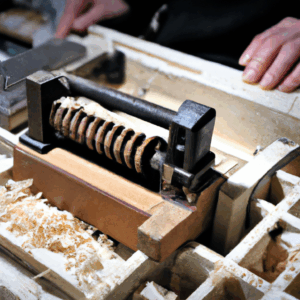
Machine tools have been integral to manufacturing since the dawn of the Industrial Revolution. Over the decades, these tools have evolved from simple manual devices to highly sophisticated automated systems. Today’s machine tools are characterized by their precision, speed, and versatility, allowing manufacturers to produce complex parts with remarkable accuracy.
During the seminar, experts discussed the historical progression of machine tools, emphasizing the transition from manual to CNC (Computer Numerical Control) systems. This evolution has not only enhanced productivity but has also paved the way for the integration of AI and IoT technologies, further revolutionizing the manufacturing process.
Section 2: Innovations in CNC Technology
One of the most significant topics covered at the seminar was the advancement of CNC technology. Modern CNC machines are equipped with state-of-the-art features that enable unprecedented levels of efficiency and precision. These machines are now capable of multi-axis machining, which allows for the creation of intricate geometries that were once considered impossible.
Speakers highlighted the role of advanced software in enhancing CNC capabilities. With real-time monitoring and adaptive control systems, manufacturers can optimize operations, reduce waste, and improve product quality. Additionally, the integration of AI algorithms enables predictive maintenance, minimizing downtime and extending machine life.
Section 3: The Rise of Additive Manufacturing
Additive manufacturing, commonly known as 3D printing, is another groundbreaking innovation discussed at the seminar. This technology has transformed the way manufacturers approach prototyping and production. Unlike traditional subtractive methods, additive manufacturing builds parts layer by layer, offering unparalleled design flexibility.
Experts at the seminar showcased various applications of additive manufacturing in industries such as aerospace, automotive, and healthcare. The ability to produce lightweight, complex structures with reduced material waste is a significant advantage. Furthermore, advancements in materials, such as high-performance polymers and metal alloys, are broadening the scope of 3D printing in industrial applications.
Section 4: Automation and Robotics in Manufacturing
The seminar also focused on the increasing role of automation and robotics in manufacturing. As labor costs rise and the demand for higher productivity grows, manufacturers are turning to robotic solutions to streamline operations. Robots are being used for tasks ranging from material handling to assembly and quality inspection.
Keynote speakers discussed the benefits of collaborative robots, or cobots, which are designed to work alongside humans. These robots are equipped with advanced sensors and safety features, making them ideal for shared workspaces. By automating repetitive tasks, cobots free up human workers to focus on more complex and creative problem-solving activities.
Section 5: The Impact of IoT and Big Data
In the digital age, the Internet of Things (IoT) and big data analytics are becoming indispensable tools in manufacturing. IoT-enabled devices allow for seamless communication between machines, facilitating real-time data collection and analysis. This capability enables manufacturers to make informed decisions, optimize processes, and enhance overall efficiency.
During the seminar, industry leaders demonstrated how big data can be harnessed to predict trends, detect anomalies, and prevent equipment failures. By leveraging data-driven insights, manufacturers can implement predictive maintenance strategies, improve supply chain management, and ultimately increase their competitive edge.
Conclusion
The “Cutting-Edge Machine Tools Innovation Seminar” provided a comprehensive overview of the latest advancements shaping the future of manufacturing. From CNC technology and additive manufacturing to automation, robotics, and IoT, these innovations offer immense potential for enhancing productivity and competitiveness.
As the industry continues to evolve, staying informed about these technological trends is crucial for manufacturing professionals. By embracing these innovations, manufacturers can not only meet the demands of today’s market but also set the stage for future growth and success.
We encourage all manufacturing professionals to actively participate in such seminars and stay engaged with the latest developments. The future of manufacturing is bright, and those who adapt to these changes are poised to thrive in this exciting new era.