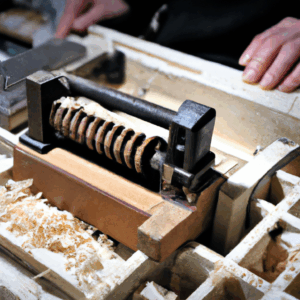

Masterful Techniques: Innovations in Machine Tools
In the dynamic world of manufacturing, the evolution of machine tools stands as a testament to human ingenuity and innovation. As the backbone of production processes, machine tools have undergone significant transformations, driven by the relentless pursuit of efficiency, precision, and sustainability. This article delves into the latest innovations in machine tools, exploring how these advancements are reshaping the manufacturing landscape.
Section 1: The Evolution of Machine Tools
Machine tools have come a long way since their inception during the Industrial Revolution. Originally developed to perform tasks that required precision beyond human capabilities, these tools have continuously evolved to meet the demands of modern manufacturing. Today’s machine tools are a blend of mechanical prowess and digital sophistication, integrating advanced control systems that enhance their functionality and versatility.
The journey from manual lathes and milling machines to computer numerical control (CNC) systems marks a significant leap in manufacturing capability. The introduction of CNC technology in the late 20th century revolutionized the industry by allowing for precise control over complex machining operations. This innovation not only improved product quality but also reduced production time and waste, paving the way for the high-speed manufacturing processes we see today.
Section 2: Precision and Accuracy – The Hallmarks of Modern Machine Tools
One of the most significant advancements in machine tools is the enhancement of precision and accuracy. Modern manufacturing demands components that meet stringent specifications, often measured in micrometers. This level of precision is essential in industries such as aerospace, automotive, and medical device manufacturing, where even the slightest deviation can have serious consequences.
Innovations such as laser measurement systems and advanced feedback loops have been integrated into machine tools to ensure exceptional accuracy. These technologies allow for real-time monitoring and adjustments during machining processes, minimizing errors and ensuring that components are produced to exact specifications. Additionally, the development of multi-axis machines has enabled the production of complex geometries with ease, further expanding the capabilities of modern machine tools.
Section 3: Automation and Smart Manufacturing
The integration of automation into machine tools has been a game-changer for the manufacturing industry. As the demand for high-volume production increases, manufacturers are turning to automated systems to enhance productivity and reduce labor costs. Automation not only speeds up production processes but also improves consistency and quality by eliminating human error.
Smart manufacturing, characterized by the use of Internet of Things (IoT) devices and artificial intelligence, is driving the next wave of innovation in machine tools. IoT-enabled machine tools can communicate with other devices and systems, providing valuable data that can be used to optimize production processes. Artificial intelligence, on the other hand, is being employed to predict maintenance needs and optimize machine performance, reducing downtime and increasing overall efficiency.
Section 4: Sustainable Manufacturing Practices
As environmental concerns become increasingly important, the manufacturing industry is under pressure to adopt sustainable practices. Machine tool manufacturers are responding by developing technologies that reduce energy consumption and minimize waste. These innovations not only help manufacturers meet regulatory requirements but also reduce operational costs.
Energy-efficient motors, regenerative braking systems, and advanced lubrication techniques are some of the technologies being implemented to enhance the sustainability of machine tools. Additionally, the use of lightweight materials and additive manufacturing processes are contributing to a reduction in material waste, further bolstering the eco-friendliness of modern machine tools.
Section 5: The Future of Machine Tools
Looking ahead, the future of machine tools is bright, with continued advancements expected to further revolutionize the manufacturing sector. The integration of technologies such as augmented reality (AR) and virtual reality (VR) is set to enhance machine tool operation and maintenance, providing operators with intuitive interfaces and real-time guidance.
Furthermore, the rise of collaborative robots, or cobots, is expected to enhance human-machine collaboration, allowing for more flexible and efficient production processes. These robots can work alongside human operators, performing tasks that require precision and consistency, while humans focus on complex decision-making and problem-solving tasks.
Conclusion
The innovations in machine tools are transforming the manufacturing landscape, offering unprecedented levels of precision, efficiency, and sustainability. As technology continues to advance, manufacturers must stay abreast of these developments to remain competitive in a rapidly evolving industry. By embracing the latest innovations, manufacturing professionals can ensure that their operations are not only efficient and cost-effective but also environmentally responsible and ready for the future.
Machine tools, once simple machines, have become sophisticated systems that are integral to modern manufacturing. As we continue to push the boundaries of what is possible, the future holds endless possibilities for innovation and growth in this critical sector.